
Convergence and Divergence: The Shifting Dynamics of Comparative Law
Home » Convergence and Divergence: The Shifting Dynamics of Comparative Law
MTSPL
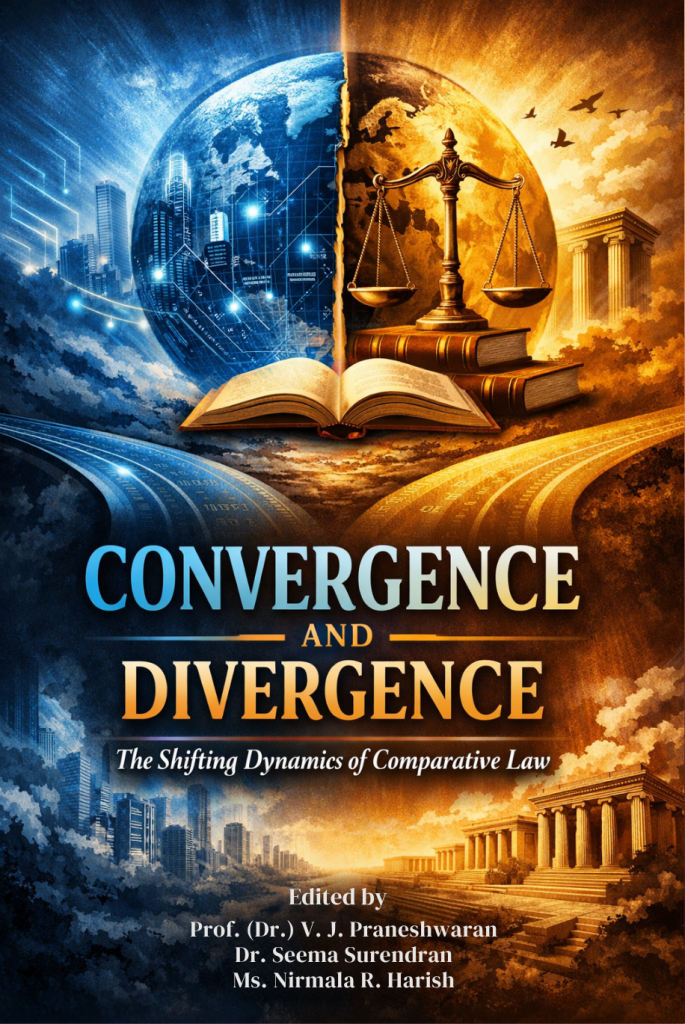
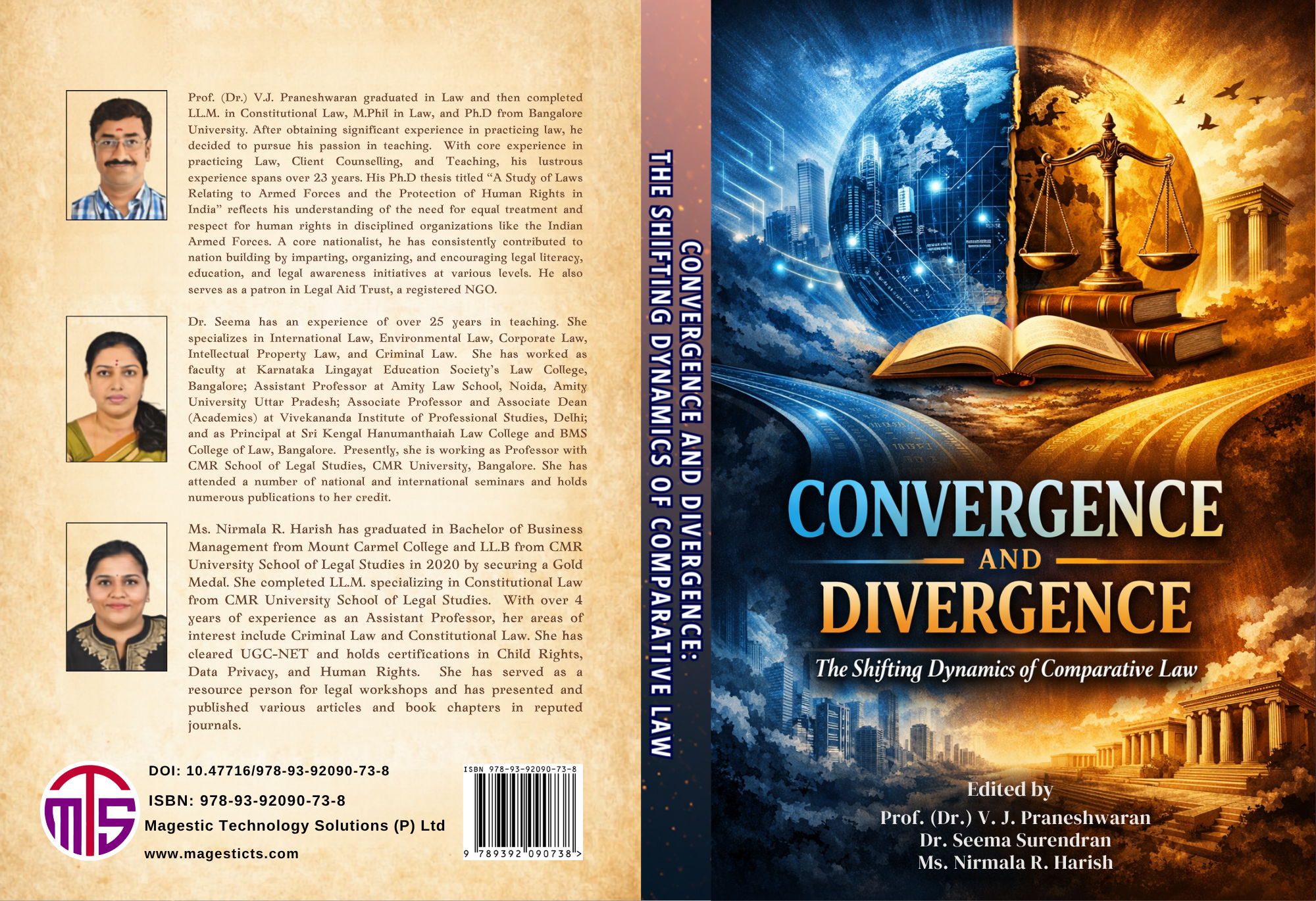
Convergence and Divergence: The Shifting Dynamics of Comparative Law
Editors:
Prof. (Dr.) V.J. Praneshwaran
Dr. Seema Surendran
Ms. Nirmala R. Harish
Publication Date:
16th April, 2026
No.of Pages: 392
Price: ₹ 500/-
ISBN:
978-93-92090-73-8
DOI:
Publisher:
Magestic Technology Solutions (P) Ltd.
Place of Publication:
Convergence and Divergence: The Shifting Dynamics of Comparative Law
A richly indexed, search-friendly digital landing page for an edited collection that examines how legal systems converge and diverge across constitutionalism, federalism, criminal justice, rights protection, institutional accountability, gender justice, cybercrime, anti-corruption, and financial regulation.
Comparative law as a living method.
Convergence and Divergence: The Shifting Dynamics of Comparative Law is an edited collection that studies contemporary legal questions through comparative inquiry across multiple jurisdictions and legal traditions. It brings together work on constitutional law, criminal justice, administrative law, human rights, anti-discrimination law, gender justice, institutional accountability, federalism, judicial review, rule of law, and financial regulation.
The volume is built around a central tension: legal systems face common pressures from globalisation, technology, human-rights discourse, democratic transformation, migration, financial regulation, and social justice claims, yet each system responds through its own constitutional text, history, political culture, and institutional design.
Its intended readers include scholars, researchers, teachers, practitioners, and advanced law students interested in comparative constitutional law, comparative public law, comparative criminal justice, governance, and the evolution of legal institutions.
India in dialogue with global legal systems.
The chapters compare legal responses in India with those of the United States, United Kingdom, Canada, Australia, Germany, France, Brazil, South Korea, and other constitutional and regulatory contexts.
Editors and academic leadership.
The edited collection is shaped by faculty expertise in constitutional law, international law, criminal law, human rights, environmental law, corporate law, intellectual property law, and legal education.
Prof. (Dr.) V.J. Praneshwaran
Director, School of Legal Studies, CMR University
Graduated in Law and completed LL.M. in Constitutional Law, M.Phil in Law, and Ph.D. from Bangalore University. With more than 23 years of experience across practice, client counselling, and teaching, his work includes a Ph.D. thesis on laws relating to the Armed Forces and protection of human rights in India. He contributes to legal literacy, legal education, legal awareness, and serves as a patron in Legal Aid Trust.
Dr. Seema Surendran
Professor, School of Legal Studies, CMR University
Has over 25 years of teaching experience with specialisation in International Law, Environmental Law, Corporate Law, Intellectual Property Law, and Criminal Law. She has held faculty and leadership roles at several institutions and has participated in national and international seminars with numerous publications to her credit.
Ms. Nirmala R. Harish
Assistant Professor, CMR School of Legal Studies
Graduated in Bachelor of Business Management from Mount Carmel College and LL.B. from CMR University School of Legal Studies in 2020 with a Gold Medal. She completed LL.M. in Constitutional Law, has over four years of teaching experience, has cleared UGC-NET, and holds certifications in Child Rights, Data Privacy, and Human Rights.
A flexible reference work for study, teaching, and research.
Readers may move through the book sequentially or consult individual chapters independently. Each chapter is self-contained, but together the chapters reveal broader patterns of legal convergence and divergence.
Doctrinal study
Use chapter abstracts and keywords to locate specific constitutional doctrines, statutory frameworks, and judicial principles.
Comparative method
Track how institutions, rights, procedures, and legal remedies travel across jurisdictions while adapting to local context.
Teaching guide
Use the thematic tags to assign readings by topic: federalism, judicial review, criminal justice, gender justice, equality, and anti-corruption.
Research discovery
Search by author, jurisdiction, keyword, chapter title, legal concept, statute, doctrine, or institutional theme.
Search all chapters, authors, abstracts, themes, and jurisdictions.
This section is rendered as semantic HTML so search engines and readers can discover chapter-level material. Use the live search controls for fast navigation inside the page.
Showing all 32 chapters.
A Comparative Study of American Dual Federalism and Canadian Constitutional Asymmetry
By Abhilash S.P.
Student, LL.M. (Criminal Law), School of Legal Studies, CMR University
Read chapter abstract and keywords
This paper offers a comparative legal and political analysis of "True Federalism" showing how the American example of dual federalism is quite different from the Canadian system of a strong executive coexisting with local authorities in decentralized arrangements. Whereas the U. S. Constitution is mainly about giving more power to the states (see the Tenth Amendment) Canada which was originally a very centralized country, has through court decisions become more of a decentralized and cooperative type of federalism. In fact, by studying fiscal independence, methods of resolving jurisdiction conflicts and amendment procedures, the paper finds that "True Federalism" is more of a changing spectrum than a fixed ideal. More importantly, this article contests the U. S. centered viewpoint that a single federalism model exists, arguing that the asymmetric and flexible Canadian solution is better able to accommodate regionalism and multiculturalism in democratic societies that are very diverse and therefore, serves as an excellent model for us all.
Majoritarianism vs. Constitutionalism: A Comparative Analysis in Modern Democratic Constitutions
By Ajith kumar V
Student, LL.M (Constitutional Law), School of Legal Studies, CMR University
Read chapter abstract and keywords
The modern democratic constitutions are based on the idea of majority rule and are no less dedicated to the restriction of the power of the government by constitutional means. In this paper, the author focuses on the conflict between majoritarianism and constitutionalism in modern democracies. Whereas in majoritarianism, the focus is on the power of the elected majority, constitutionalism aims at safeguarding basic rights, control of the rule of law, and maintenance of institutional balance by judicial review and separation of powers. The research takes a comparative approach to public law in relation to India, the United States and Germany. It examines the way written constitutions of these jurisdictions have tried to balance democratic will and constitutional supremacy. Particular focus is placed on doctrines such as the Basic Structure Doctrine in India, judicial review in the United States, and the Eternity Clause in Germany that serve to prevent the abuse of majoritarian authority. The paper supports the claim that constitutionalism does not undermine democracy; instead, it empowers it by securing majority rule in a structure of rights, accountability, and institutional checks. Constitutional restrictions are necessary barriers protecting minorities and democratic security in plural and diverse societies. By conducting comparative analysis, this study points to the fact that sustainable democracy is not only based on the electoral mandate but also on the need to follow constitutional principles.
A Comparative Study on the Adversarial and Inquisitorial Systems of Criminal Justice
By Alia Farooq
Student, LL.M. (Commercial Law), School of Legal Studies, CMR University
Read chapter abstract and keywords
The adversarial system, employed in most common law jurisdictions including the United States and the United Kingdom, is founded upon a trial between the prosecution and the defence in court, with the judge acting as a neutral referee. The inquisitorial system, typical of civil law jurisdictions such as France, Germany, and Indonesia, is one in which judges actively participate in the investigation of cases and collection of evidence. This study examines the formation of these two systems based on different legal traditions and the manner in which they are infused with political and administrative systems in their countries of origin. The adversarial system places strong emphasis on safeguarding the rights of the accused and giving both parties equal opportunity to present their cases. Nonetheless, this may operate unfairly against poor defendants who may not be able to secure strong representation. The inquisitorial system seeks to find the truth in a more effective way through judicial investigation, though this method may raise concerns about impartiality because of the deep involvement of judges in the investigative process. This comparative study shows that modern systems of criminal justice are increasingly adopting aspects of both systems.
Hate Speech and Constitutional Limits on Freedom of Speech: A Comparative Study of India and USA
By Ameena
Student, LL.M. (Commercial Law), School of Legal Studies, CMR University
Read chapter abstract and keywords
Freedom of speech is the cornerstone of any democratic nation, but it also raises difficult constitutional issues when expression turns into hate speech that harms individuals, communities, and social peace. The First Amendment in the United States provides very strong protection for speech, even where the speech is deeply offensive or disturbing. Courts have generally avoided restricting such expression except where it poses a direct and immediate danger of violence or lawlessness. India, however, follows a more moderated constitutional approach. Freedom of speech is protected under Article 19(1)(a), but Article 19(2) permits specific reasonable restrictions, allowing the State to regulate speech in the interest of the common good, decency, and peaceful coexistence. The concept of hate speech as a threat to constitutional principles of equality, dignity, and fraternity has therefore received greater judicial attention in India. This paper identifies the philosophical and social premises on which hate speech is regulated in both nations through an analysis of constitutional provisions, statutory laws, and landmark judicial decisions. It also examines the dangers present in both models: on the one hand, excessive protection of speech may expose vulnerable groups to serious harm; on the other, excessive regulatory power may be abused to suppress dissent. By comparing these democratic models, the paper seeks to understand how democracies can create a meaningful balance between safeguarding free expression and addressing the harms caused by hate speech. The study concludes that constitutional limits on speech should be shaped by social context and democratic values rather than rigid absolute doctrines.
Judicial Review in India and the United States: A Comparative Study
By Ananya.M
Student, LL.M. (Criminal Law), School of Legal Studies, CMR University
Read chapter abstract and keywords
Judicial review constitutes one of the most consequential instruments of constitutional governance in modern democratic systems. It empowers courts to examine the validity of legislative enactments and executive actions against constitutional standards and to strike down measures that violate constitutional mandates. This paper undertakes a comparative constitutional analysis of judicial review as practised in the Republic of India and the United States of America, two of the world’s most influential constitutional democracies. While both systems acknowledge the centrality of judicial review, they differ markedly in their textual foundations, institutional arrangements, doctrinal development, and practical scope. The Indian Supreme Court derives its power of judicial review from express constitutional provisions, particularly Articles 13, 32, and 226, and has evolved the Basic Structure Doctrine to impose limits even on constituent power. The United States Supreme Court, by contrast, established judicial review through judicial interpretation in Marbury v Madison, a precedent that has governed American constitutional adjudication for over two centuries. This paper examines these convergences and divergences across six thematic dimensions: constitutional foundations, institutional design, doctrinal evolution, scope of review, judicial activism, and the relationship between democracy and judicial supremacy. The analysis concludes that although both systems are animated by the shared value of constitutional supremacy, the Indian model is more expansive, more explicitly rights-protective, and more responsive to socio-economic imperatives than its American counterpart.
A Comparative Study of Workplace Sexual Harassment Redressal Mechanisms under POSH Act and UK Equality Act
By Arjun S
Student, LL.M. (Commercial Law), School of Legal Studies, CMR University
Read chapter abstract and keywords
This paper compares and contrasts the legal institutions established under the POSH Act, 2013 and the Equality Act, 2010 of the United Kingdom as redressal mechanisms for workplace sexual harassment. In particular, it compares the Internal Complaints Committee (ICC) model required by the POSH Act with the Employment Tribunal (ET) model operating under the Equality Act, 2010. The paper critically assesses the structural design, accessibility, evidentiary standards, enforcement mechanisms, and institutional accountability of each system through a doctrinal comparative methodology. The analysis shows that although the POSH Act ICC model offers immediacy and proximity within organisations, it suffers from structural conflicts of interest, uneven enforcement, and inadequate protection for complainants. In contrast, the Employment Tribunal system in the United Kingdom, despite its procedural strength and institutional independence, presents barriers of cost, complexity, and delay that may discourage victims from pursuing claims. The paper argues that an effective redressal architecture requires a hybrid framework that combines the accessibility of internal committees with the institutional independence and enforcement capacity of external adjudicative institutions. Both jurisdictions, therefore, require legislative and institutional reform.
Constitutional Protection of the Right to Trade and Business: A Comparative Study of India and Canada
By Arundathi.R
Student, LL.M. (Criminal Law), School of Legal Studies, CMR University
Read chapter abstract and keywords
The right to trade and carry on business occupies an important position within constitutional democracies, as it directly affects economic freedom, market regulation, and individual autonomy. This paper undertakes a comparative analysis of the constitutional protection of the right to trade and business in India and Canada, highlighting the differing constitutional philosophies adopted by the two jurisdictions. In India, the Constitution explicitly guarantees the freedom to practise any profession or to carry on any occupation, trade, or business under Article 19(1)(g), subject to reasonable restrictions imposed in the interest of the general public under Article 19(6). This express recognition reflects India’s commitment to balancing individual economic liberty with social welfare and regulatory control. Judicial interpretation by Indian courts has played a crucial role in defining the scope and limits of this right, particularly through doctrines such as reasonableness and proportionality. In contrast, the Canadian constitutional framework does not expressly recognise a fundamental right to trade or business. The Canadian Charter of Rights and Freedoms largely omits economic rights, and commercial freedoms are instead regulated through legislative competence under the Constitution Act, 1867, particularly through the division of powers relating to trade and commerce. Protection for business activity in Canada thus emerges indirectly through common law principles and federal–provincial power allocation rather than as an individual constitutional guarantee. This comparative study reveals that while India constitutionalises economic freedom as a justiciable right, Canada adopts a structural and regulatory approach. The paper argues that these differences reflect broader constitutional priorities and provide valuable insights into how economic liberties are shaped by constitutional design.
Cyber Crime and Challenges to Criminal Investigation
By Basavaraja B
LL.M. (Constitutional Law), School of Legal Studies, CMR University, Bengaluru
Read chapter abstract and keywords
The growth of the internet and electronic devices has created a new world that can be navigated with just a few touches. People who conduct business with banks no longer need to wait in long queues for their token numbers, because mobile banking and online banking now allow most transactions to be completed through phones. The globe has effectively become smaller because of cyberspace and the cyber world. The limitations once imposed by the physical world have been reduced by numerous technological advancements. As technology has become essential to trade, commerce, entertainment, government, and daily life, cybercrime has also emerged as a serious threat. This includes disruption of critical infrastructure, deceptive signalling, disclosure of sensitive information, compromising of electronic media, and incapacitation of digital systems within seconds. Unauthorised access to computerised information with the intent to alter, destroy, or steal data remains one of the central manifestations of cybercrime. The objective of this paper is to offer a comprehensive evaluation of the current cybercrime situation in India. It focuses on emerging trends in cybercrime and critically assesses the legal measures available to combat them. Particular emphasis is placed on the role and effectiveness of law enforcement agencies such as cyber policing units, forensic units, and other specialised investigation teams in dealing with such offences.
Abuse of Public Office and White Collar Crime: A Study of Corruption in Public Administration
By Beireizi Khithie
Student, LL.M (Constitutional Law), School of Legal Studies, CMR University
Read chapter abstract and keywords
White collar crime refers to a form of crime perpetrated by individuals holding positions of trust and authority within society. In many instances, government officials abuse the authority of their office for personal advantage. This abuse of power and misuse of office is commonly associated with corruption in public administration. Such practices include bribery, embezzlement of public funds, favouritism, fraud, and misappropriation of government resources. Public office holders are expected to act honestly and responsibly toward citizens. Nevertheless, when they exploit their position for unlawful financial gain, they erode public confidence in government institutions and damage the normal functioning of administration. Corruption within government offices also affects delivery of public services and creates inequality within society. This paper examines the connection between abuse of public office and white collar crime in the field of public administration. It discusses the reasons behind corruption by public officers, the law governing their actions, and the difficulties involved in curbing these crimes. It also considers transparency, accountability, and robust legal frameworks as means of reducing corruption and promoting honest administration of the State.
A Comparative Study of Federalism and Cooperative Federalism in India and USA
By Bharath. D
LL.M. (Commercial Law), SOLS, CMR University, Bengaluru
Read chapter abstract and keywords
Federalism is a constitutional tool used to delegate powers between two levels of government in such a way that unity is promoted without compromising diversity. In India and the United States, federalism functions as a means of balancing national integrity with regional autonomy, though the historical context, constitutional design, and political dynamics in the two jurisdictions are significantly different. The United States is generally viewed as a classical or dual federation in which the Constitution establishes a relatively clear demarcation between the powers of the federal and State governments, although over time these lines have become increasingly blurred. India, by contrast, has often been described as a quasi-federal polity or a Union with a federal form, combining federal features with a much stronger Union government and an increasing emphasis on cooperative federalism. This paper undertakes a comparative doctrinal and analytical study of federalism and cooperative federalism in India and the United States, with particular focus on constitutional design, legislative and financial relations, and institutions of intergovernmental cooperation. It pays special attention to mechanisms such as the Goods and Services Tax Council, the Inter-State Council, and centrally sponsored schemes in India, as well as grants-in-aid and shared programmes in the United States, to show how cooperative federalism operates in practice. The paper argues that cooperative federalism has evolved in both countries as a practical response to complex governance issues, while at the same time generat- ing continuing disputes over State sovereignty, accountability, and democratic legitimacy.
Victims’ Rights and Constitutional Protection: An Analysis of India and the United Kingdom
By Bindu. V
Student, LL.M. (Commercial Law), School of Legal Studies, CMR University
Read chapter abstract and keywords
Criminal justice has traditionally been offender-centric, with the victim often marginalised in the process. More recent constitutional jurisprudence, however, increasingly recognises victims as rights-holders. This paper undertakes a comparative analysis of victims’ rights and constitutional protection in India and the United Kingdom, examining how each system protects victims through its legal structure. In India, victims’ rights have evolved largely through judicial interpretation of Article 21, which guarantees the right to life and personal liberty. Through judicial expansion, these rights have come to include compensation, participation, and access to justice. By contrast, the United Kingdom, which has no single written constitution, protects victims through a more structured framework shaped by the Human Rights Act 1998 and subsequent legislation. The paper adopts a doctrinal and comparative approach to examine constitutional philosophies, judicial responses, and legislative mechanisms in both jurisdictions. It argues that both systems show an increasing tendency to recognise victims without undermining the fair trial rights of the accused, and that there is a need for a clearer and more effective framework of victim protection.
Judicial Review as a Safeguard of Constitutionalism in India and United States
By Chaithra A Salian
Student, LL.M. (Commercial Law), School of Legal Studies, CMR University judiciary.”
Read chapter abstract and keywords
The paper discusses judicial review as a basic protection of constitutionalism in India and the United States, undertaking a comparative analysis of constitutional supremacy and individual rights through judicial decisions in both democracies. This study assesses the functions, extent, and efficacy of judicial review in ensuring constitutional governance and balancing legislative and executive excesses in both countries. The constitutional basis of judicial review through Marbury v Madison in the United States and its inclusion in the Indian Constitution through Articles 13, 32, 136, 226, and 227 establishes constitutional supremacy, separation of powers, and the rule of law as shared doctrinal principles. The paper compares the scope of review through American and Indian doctrines such as locus standi, justiciability, and judicial restraint. It examines landmark decisions of both Supreme Courts that shaped constitutional interpretation concerning protection of fundamental rights, legislative competence, and executive accountability. It also discusses how the debate between judicial activism and judicial restraint developed in both jurisdictions and how courts balance democratic decision-making with constitutional protection. Finally, the study considers standards of review used in evaluating governmental acts, including rational basis and strict scrutiny in the United States and proportionality in India. Through comparative analysis, the paper concludes that judicial review in both systems plays a crucial role in upholding constitutional principles, protecting minority rights, and ensuring government accountability.
Role of Victims in Criminal Justice System: Comparative Analysis of India and USA
By Charitha R Reddy
Student, LL.M. (Commercial Law), School of Legal Studies, CMR University, Bengaluru
Read chapter abstract and keywords
The role of victims within the criminal justice system has developed across jurisdictions, reflecting different legal traditions, legislative agendas, and public expectations. Initially, victims were treated largely as witnesses whose role was limited to supporting the prosecution. This paper explains the evolution of victimology, tracing its movement from a witness-centric model to a rights-based framework influenced by social movements and international norms. During the investigation and prosecution stages, the paper highlights a significant disparity: the United States system grants victims enforceable informational rights and the right to confer with the prosecutor, whereas Indian victims are often sidelined by procedural delays and the absence of uniform legal standing. A comparative analysis is also undertaken of the Victim Impact Statement, a deeply institutionalised tool in United States sentencing that has only recently begun to receive attention in India as a way to express the suffering of victims. The paper further compares compensation systems, noting that the United States uses a robust structure of restitution and State-funded programmes, while India has historically relied on court-discretionary compensation under procedural laws, often lacking consistency and effective enforcement. The paper also analyses the victim’s role in bail hearings and plea bargaining. It concludes that while both nations are moving toward a more victim-centric hybrid model, India requires stronger statutory enforcement to bridge the gap between judicial discourse and procedural reality, thereby creating a system that balances the rights of the accused with the dignity of the victim.
Rule of Law as a Constitutional Principle: Germany’s Rechtsstaat and India’s Basic Structure Doctrine
By Chetan Sharma K
Student, LL.M. (Commercial Law), School of Legal Studies, CMR University
Read chapter abstract and keywords
The main theme of this comparative analysis between the Rechtsstaat concept in Germany and the Basic Structure doctrine in India is the Rule of Law, a foundational idea that restrains government authority and promotes governance based on legality, fairness, and institutional accountability. The Basic Law (Grundgesetz) of Germany expresses the idea of Rechtsstaat through a constitutional order committed to legality, legal certainty, proportionality, separation of powers, and judicial protection, as reinforced through the jurisprudence of the Federal Constitutional Court. In India, although the Rule of Law is not expressly codified in one provision, the Supreme Court has incorporated it into the doctrine of Basic Structure, originating from the landmark decision in Kesavananda Bharati v State of Kerala. This doctrine protects constitutional supremacy, judicial review, and the safeguarding of fundamental rights from destructive amendment or institutional overreach. This paper compares the more textually entrenched German model with the judicially developed Indian model and highlights the constitutional mechanisms employed in each jurisdiction to preserve democratic governance against legislative, executive, and amendment-related pressures.
Role of Vigilance Agencies: A Study of Commission in India
By Chinmayi A. Shet
Student, LL.M. (Commercial Law), School of Legal Studies, CMR University
Read chapter abstract and keywords
In India’s democratic structure, vigilance agencies serve as crucial safeguards against corruption, which remains a persistent threat to public trust, efficient governance, and equitable development. Corruption and abuse of power continue to obstruct good administration, making independent vigilance institutions essential for promoting integrity, transparency, and accountability. This paper examines the role of vigilance mechanisms in India, with primary focus on the Central Vigilance Commission (CVC), the apex statutory body, and on State vigilance structures, assessing their contribution to controlling corruption in public office. It defines vigilance as a proactive instrument to prevent misuse of authority and traces its evolution from the Santhanam Committee recommendations in 1964, which led to the creation of the CVC, to its statutory recognition under the Central Vigilance Commission Act, 2003, following the Supreme Court’s directions in Vineet Narain v Union of India for greater institutional autonomy. The paper analyses the structure of the CVC as a multi-member body headed by the Central Vigilance Commissioner and up to two Vigilance Commissioners, and studies its main functions: superintendence over the Central Bureau of Investigation in corruption cases under the Prevention of Corruption Act, 1988; advisory authority in disciplinary proceedings; promotion of ethical conduct and procurement integrity; scrutiny of tenders to reduce collusion; and protection of whistleblowers. The Commission performs both preventive and corrective functions. At the same time, important challenges remain, including investigative delay, limited direct powers, incomplete institutional independence, executive influence in appointments, political interference, and restricted jurisdiction. The paper therefore recommends reforms such as stronger autonomy, better interagency coordination, improved whistleblower protection, and wider use of digital tools for transparency. Ultimately, effective vigilance commissions are necessary for clean governance, and strengthening them is essential for public confidence and accountable administration in India.
Administrative Discretion and Application of Natural Justice: A Comparative Study of United Kingdom and Australia
By Darshana Kabbin
Student, LL.M. (Commercial Law), School of Legal Studies, CMR University
Read chapter abstract and keywords
Administrative discretion is an essential feature of modern administrative systems, allowing executive authorities to make decisions efficiently in complex and dynamic governance structures. However, the exercise of such discretion carries the risk of arbitrariness and abuse of power, which necessitates the application of the principles of natural justice to ensure fairness and accountability. This study undertakes a comparative analysis of administrative discretion and the application of natural justice in the United Kingdom and Australia, two common law jurisdictions with shared legal foundations yet distinct administrative approaches. In the United Kingdom, administrative discretion is regulated primarily through judicial review, grounded in the principles of legality, rationality, and procedural propriety. Natural justice, commonly described as the rules of fairness, is applied flexibly, depending on the nature of the administrative power exercised and the extent to which individual rights and legitimate expectations are affected. Courts assess fairness on a case-by-case basis, allowing adaptability but sometimes creating uncertainty. Australia, while inheriting the common law tradition, has developed a more structured framework for controlling administrative discretion. The principles of natural justice, usually referred to as procedural fairness, are presumed to apply to administrative decisions unless clearly excluded by legislation. The comparative analysis shows that while both jurisdictions attempt to balance administrative efficiency with individual rights, the United Kingdom gives greater importance to contextual flexibility, whereas Australia emphasises certainty and systematic application of procedural fairness.
Lokpal and Lokayukta in India: Effectiveness and Challenges
By Dhanush J
Student, LL.M. (Commercial Law), School of Legal Studies, CMR University, Bengaluru
Read chapter abstract and keywords
Corruption continues to pose a deep-rooted challenge to effective governance in India. The long-standing demand for an impartial authority to investigate allegations of corruption against public officials led to the establishment of the Lokpal and Lokayuktas under the Lokpal and Lokayuktas Act, 2013. Conceived as independent ombudsman institutions, they were intended to enhance transparency and reinforce accountability in public administration. However, more than a decade after their creation, their practical impact remains uncertain. This paper traces the historical evolution, structural framework, and functioning of the Lokpal and Lokayuktas in India. It critically assesses their success in tackling corruption and highlights the major obstacles they face, including limited autonomy, overlapping jurisdictions, political interference, and implementation inefficiencies. The study concludes by proposing key reforms to strengthen these bodies and advance the broader goal of accountable and transparent governance.
Ink, Irony, and the Cartoonist’s Dilemma: Satire vs. Hate Speech under Indian, German, and French Law
By G Kusuma
Student, LL.M. (Commercial Law), School of Legal Studies, CMR University
Read chapter abstract and keywords
We all grow up watching cartoons that are often funny, yet sometimes hurtful or vengeful when based on politics or socially sensitive themes. Satire, meanwhile, is a literary and expressive device that comically presents the vices of human nature. It has long existed as a form of speech and artistic criticism. Political and civic satire may, however, cross the threshold of what can be tolerated and may offend, defame, or, where directed against a specific race, sect, or social group, become hate speech. Germany, India, and France each regulate hate speech differently. This paper analyses what satire is, its forms, what cartoon-based satire means, and how it evolved in these three countries. It compares the relevant legal regimes and seeks to identify aspects that may be better modelled in India. The paper also examines the social and political concerns underlying satirical representation and its effect on public thought and attitudes, while highlighting prominent incidents and cases from the three jurisdictions to ground the analysis in practice.
Domestic Violence Against Women in India: Legal and Judicial Perspectives
By Gayathri Kurup
Student, LL.M. (Commercial Law), School of Legal Studies, CMR University
Read chapter abstract and keywords
Domestic violence against women continues to be a serious violation of human rights in India, rooted in deep-seated social, cultural, and patriarchal structures. Despite constitutional guarantees of equality, dignity, and personal liberty under Articles 14, 15, and 21 of the Constitution of India, domestic violence remains widespread and significantly underreported. This paper examines the legal framework governing domestic violence in India, with special reference to the Protection of Women from Domestic Violence Act, 2005 and relevant provisions of the Bharatiya Nyaya Sanhita. It further analyses the role of the judiciary in interpreting and expanding the scope of protection through progressive judicial pronouncements. Landmark judgments of the Supreme Court and High Courts have played a crucial role in recognising various forms of abuse, including emotional and economic violence, and in extending legal protection to women in non-traditional domestic relationships. The study critically evaluates judicial responses, enforcement challenges, and existing legal gaps, and emphasises the need for effective implementation and judicial sensitivity to ensure justice and protection for women. Comparative perspectives are also considered in order to evaluate global best practices in addressing domestic violence.
Legal Framework on Racial Discrimination: An Analysis of India and USA
By Gnaneshwari G
Student, LL.M. (Constitutional Law), School of Legal Studies, CMR University, Bengaluru
Read chapter abstract and keywords
In both the United States and India, the legal framework against racial and identity-based discrimination functions as a bridge between historical exclusion and a future of substantive equality. In the United States, this architecture is primarily anchored in the Fourteenth Amendment’s Equal Protection Clause and the landmark Civil Rights Act of 1964, which together dismantled the doctrine of “separate but equal” and created a strong shield against discrimination in employment, education, and public spaces. In contrast, India’s framework, while sharing the democratic ideal of equality, is more explicitly remedial and proactive. It moves beyond the general non-discrimination mandate of Article 15 to include a constitutionalised system of reservations designed to address the unique, hereditary structural violence of the caste system, a hierarchy that often functions as a parallel to race in its social rigidity. As the legal landscape moves into 2026, the contrast in the evolution of these two systems has become especially striking. While the United States has seen a tightening of race-conscious policies, India has deepened institutional inclusion through the UGC Promotion of Equity Regulations, 2026. These new rules shift law from a distant judicial remedy to a daily campus reality by mandating Equity Squads, 24/7 helplines, and time-bound grievance redressal to tackle not only overt abuse but also the micro-aggressions that define modern exclusion. Ultimately, while the American framework focuses on protecting the individual from state and private bias through litigation, the Indian model increasingly emphasises institutional accountability and the active engineering of social diversity. Both systems demonstrate that a truly humanised law must look beyond the fiction of the “neutral” citizen to recognise the person whose opportunities are still shaped by the history written into their lineage.
Comparative Analysis of Anti-Money Laundering Laws in India and the United States
By Gopinath Deshi
Student, LL.M. (Constitutional Law), School of Legal Studies, CMR University
Read chapter abstract and keywords
Money laundering represents one of the most serious threats to the integrity of the global financial system. It enables criminals to conceal the source of illicitly acquired funds and integrate them into the lawful economy. Through increasingly sophisticated financial operations, offenders can disguise money earned through corruption, drug trafficking, tax evasion, fraud, terrorism financing, and organised crime. The globalisation of financial markets and the rapid development of technology have made money laundering more complex and harder to detect. In response to these threats, countries around the world have developed legislative and institutional mechanisms to detect, prevent, and punish money laundering. India and the United States are two important jurisdictions with comprehensive anti-money laundering regimes. In India, the primary legislation is the Prevention of Money Laundering Act, 2002, which criminalises laundering of the proceeds of crime and empowers authorities to investigate and seize illicit assets. The United States, by contrast, employs a layered framework built around the Bank Secrecy Act, 1970, the Money Laundering Control Act, 1986, and the USA PATRIOT Act, 2001, supported by an extensive financial reporting system and multiple regulatory bodies. This chapter compares the anti-money laundering systems of India and the United States. It examines the legislative framework, enforcement mechanisms, major judicial decisions, and institutional structures in both jurisdictions. It also analyses contemporary challenges such as cross-border financial crime, shell companies, digital currencies, and enforcement limitations. Finally, it suggests reforms and best practices that may strengthen global anti-money laundering efforts through technology, regulatory coordination, and institutional capacity building.
Comparative Study on the Scope of Judicial Review in India and the UK
By Hamsa K
Student, LL.M. (Criminal Law), School of Legal Studies, CMR University
Read chapter abstract and keywords
This chapter presents a comparative analysis of the scope and application of judicial review in India and the United Kingdom, examining how two distinct constitutional frameworks negotiate the tension between legislative supremacy, executive action, and the protection of fundamental rights. India operates under a written Constitution with a federal structure, while the United Kingdom functions under an uncodified constitutional arrangement anchored in parliamentary sovereignty. The study traces the evolution of judicial review from its common law roots in the United Kingdom to its expansive, basic-structure-oriented form in India. In the United Kingdom, judicial review has traditionally been confined to the vires of administrative action, with emphasis on illegality, irrationality, and procedural impropriety. The chapter also highlights the transformative effect of the Human Rights Act 1998, which introduced proportionality and narrowed the gap between British administrative law and constitutional adjudication. It concludes that in both jurisdictions the scope of judicial review is increasingly shaped by the global movement toward constitutionalism and by the need to hold the modern administrative state accountable.
Racial Discrimination as a Violation of the Right to Equality: A Constitutional Perspective
By Hanifa Arif
Student, LL.M. (Commercial Law), School of Legal Studies, CMR University
Read chapter abstract and keywords
Racial discrimination remains a serious barrier to the constitutional right to equality and equal protection of the law. Although the Indian Constitution does not repeatedly use the term “race” across all equality provisions, Articles 14 and 15 together establish a broad commitment to non-discrimination and substantive equality. This chapter examines racial discrimination as a violation of the constitutional right to equality, with particular attention to Indian jurisprudence. It explores how the Supreme Court of India has interpreted equality beyond formal sameness and has increasingly used it to address discrimination rooted in historical and structural disadvantage. The chapter analyses the relevance of non-arbitrariness, dignity, and substantive equality in understanding discrimination against racial and ethnic minorities. It also considers the influence of international human rights norms, particularly the International Convention on the Elimination of All Forms of Racial Discrimination, on constitutional interpretation in India. The chapter argues that constitutional equality must be treated as a dynamic and transformative principle capable of responding to structural discrimination. It concludes that meaningful resistance to racial discrimination requires a combination of constitutional interpretation, legislative reform, and institutional responsibility.
A Comparative Analysis of the Victim Compensation in the Criminal Justice System with reference to India and France
By Kaushal Kamath
Student, LL.M. (Commercial Law), School of Legal Studies, CMR University
Read chapter abstract and keywords
Compensation for victims in the criminal justice systems of India and France has been influenced by two very different legal philosophies. Historically, victims were almost completely left out of the criminal proceedings and were figuratively referred to as the "forgotten man" or even the "weeping beggar" at the doors of justice. Over the last few decades this has slowly been changing. Apart from law reforms, the courts’ active role in the matter has led to the victim being recognized as an important party in the justice process. In India, the departure is from a discretionary legislative framework of Section 357 of the Code of Criminal Procedure, 1973, to a more structured and time, bound system under Section 396 of Bharatiya Nagarik Suraksha Sanhita, 2023. France, however, has a different institutional setup. Under the partie civile procedure, a victim can claim civil damages during the criminal proceedings and may even start a criminal case on his or her own. The system is also supported by specialized victim compensation mechanisms such as the Guarantee Fund for Victims (FGTI), JIVAT, and SARVI, which ensure that compensation is not entirely up to the financial possibilities of the offender. Hence, the paper looks at two different regimes and how they deal with the issues of primary victimisation as well as secondary victimisation.
Delegated Legislation and Separation of Power: A Comparative Study of India and United Kingdom
By Kshema K Poojary
Student, LL.M. (Commercial Law), School of Legal Studies, CMR University
Read chapter abstract and keywords
The doctrine of separation of powers is an important principle of constitutional governance, as it ensures that the powers of the legislature, executive, and judiciary remain balanced and prevent the concentration of authority in a single institution. However, with the growing complexity of modern administration, legislatures increasingly rely on delegated legislation, where certain law-making powers are given to the executive to make detailed rules and regulations. While this practice helps in efficient governance, it also raises concerns about maintaining the balance of power between different branches of government. This paper aims to examines the relationship between delegated legislation and the principle of separation of powers through a comparative study of India and the United Kingdom. India follows a written constitutional system where delegated legislation is subject to constitutional limits and judicial review, and courts play an important role in preventing excessive delegation of legislative powers. In contrast, the United Kingdom operates under the principle of parliamentary sovereignty, where delegated legislation is mainly controlled through parliamentary oversight and administrative law principles. The study highlights that although delegated legislation is necessary for effective governance, proper safeguards such as legislative supervision and judicial review are essential to ensure accountability and to protect the constitutional balance of power.
Rule of Law In India and United Kingdom: A Comparative Study
By Kumar Raj B
Student, LL.M.(Constitution Law),School of Legal Studies, CMR University Bengaluru
Read chapter abstract and keywords
The Rule of Law is defined as basis that ensures no person is above the law, thus emphasizing the supremacy of law. This principle is practiced in various countries across the world, with examples including India, UK. This paper highlight the comparative aspects of the Rule of Law in India, and United Kingdom. The ROL is essential part of a welfare state, thus making it essential to ensure it is implemented in all countries across the world. The desire to have a fair society is demonstrated in the ideologies of the Rule of Law, which seek to ensure wealth creation, human rights, and a decent life in all countries. This study aims to make a critical comparison of verity and productivity of concept in the legal systems of these two nations and how both systems have effectively advanced and delivered the ice to their people by officially recognizing fundamental rights and liberties, thus defining the conceptual boundaries of the term ’rule of law.’
Constitution and Constitutionalism: A Comparative Perspective on Governance in India and Australia
By Mythili. M
Student, LL.M (Criminal Law), School of Legal Studies, CMR University
Read chapter abstract and keywords
This paper presents a comparative analysis of constitutionalism in India and Australia, examining the intricacies of federalism, rights protection, and judicial review in these two democracies. India’s Constitution explicitly guarantees fundamental rights, while Australia relies on implied rights and legislative protections. The study contrasts India’s strong central government with Australia’s cooperative federalism, highlighting differences in centre-state relations and policy implementation. Furthermore, it scrutinizes the roles of the Supreme Court of India and the High Court of Australia in interpreting constitutional provisions, shaping governance, and protecting rights. By comparing these systems, the paper reveals key similarities and differences in approaches to constitutionalism, offering valuable insights into effective governance, rights protection, and the evolving nature of constitutional frameworks in diverse democratic contexts.
The Position of Victims and the Accused in the Criminal Justice System: A Comparative Study of India and The United States
By Namrata Philip
Student, LL.M. (Commercial Law), School of Legal Studies, CMR University, Bengaluru
Read chapter abstract and keywords
The criminal justice system is aimed at balancing the rights of victims and accused while ensuring fairness and accountability. Both India and the United States traditionally emphasized on due process and constitutional protections for the accused, such as fair trial, right to legal representation, and presumption of innocence. However, the recent reforms have strengthened the rights of victims through compensation programs, participation in the proceedings, and victim impact statements. This comparative study examines the legal and constitutional status of the victim and the accused in both jurisdictions, in terms of whether recent reforms have succeeded in creating a principled balance without undermining the fundamental due process protections.
Protecting Women from Domestic Abuse: A Comparative Analysis of India and the United States of America
By Navyashree
Student, LL.M. (Commercial Law), School of Legal Studies, CMR University Bengaluru
Read chapter abstract and keywords
Domestic violence is a grave breach of women’s human rights and remains a common social and legal problem across many jurisdictions. Legal systems in turn have responded by passing laws that aim to address abuse, safeguards victims and provide redress. The Protection of Women from Domestic Violence Act, 2005 (PWDVA) in India takes a more civil paradigm allowing women to seek immediate relief through protective orders and the right to reside in the shared household, along with criminal enforcement. In contrast, the United States (U.S.) combats domestic violence primarily under the Violence Against Women Act, 1994 (VAWA) that incorporates criminal prosecution with federal financial support of support shelters, legal assistance, and capacity-building programmes. This paper compares the PWDVA and VAWA by examining their coverage, enforcement system, institutional structures and support systems for survivors. Although the Indian statute provides a broad definition of what constitutes domestic abuse, its effectiveness is often compromised by the ineffective implementation, procedural delays, disproportional inter-state funding, and lack of data collection. On the contrary, organized financing and coordinated implementation under VAWA have strengthened service delivery and institutional sensitivity. The paper argues that differences in legal traditions and enforcement practices significantly influence outcomes for survivors and concludes by proposing practical reforms in India, Protecting Women from Domestic Abuse: A Comparative Analysis of India and the United States of America such as specific funding and defined agency roles, to make the legal protection practical.
The Role of Bill Of Rights and Independent Judiciary in United States and India
By Neeksha.K.N
Student, LLM (Commercial Law), School of Legal Studies, CMR University, Bengaluru
Read chapter abstract and keywords
The protection of fundamental liberties in constitutional democracies depends critically on how a Bill of Rights and an independent judiciary work together. The Bill of Rights expresses core values such as liberty, equality and due process, but it is the judiciary acting without political interference that converts these values into enforceable rights for individuals. In the United States, the doctrine of judicial review announced in Marbury v. Madison enables courts to invalidate executive and legislative measures that violate the Bill of Rights. In India, the High Courts and Supreme Court perform similar role under Part III of the Constitution, using tools such as the basic structure doctrine and expansive readings of Articles 14, 19 and 21 to preserve Fundamental Rights. A comparison of the two systems shows that, despite differences in constitutional text, structure and historical context, both rely on judicial independence to maintain constitutional supremacy, uphold separation of powers and restrain majoritarian excess. This study argues that a Bill of Rights is effective only when supported by judicial institutions that enjoy autonomy, integrity and interpretative authority. Together, these constitutional mechanisms promote democratic accountability, safeguard human dignity and allow rights jurisprudence to respond to evolving social realities.
Criminalising Hatred: A Comparative Study of Hate Crimes in India and the U.S
By Nidhi T
Student, LL.M. (Criminal Law), School of Legal Studies, CMR University
Read chapter abstract and keywords
Hatred and prejudice are emotions that exist to some extent in every person’s mind and heart. But when such emotions result in violent actions, intimidating behaviour, and/or destruction of property, they move from personal prejudice to crime that requires legal redress. Hate crimes are a prime example of such a dangerous shift in behaviour, where a person is targeted not only for their actions but also for their identity. This paper examines the criminalisation of hatred through a comparative study of hate crime frameworks in India and the United States. By analysing the legal recognition, statutory provisions, and enforcement mechanisms in both jurisdictions, the study highlights key differences in how hate-motivated offences are defined, prosecuted, and addressed. The comparative approach seeks to understand how these differences influence justice delivery, victim protection, and societal responses, while also assessing the role of law in deterring crimes driven by hatred.
Rule of Law and Judicial Review in Constitutional Democracy: A comparative Study with India, and United States
By P. Thechano Ngullie
Student, LL.M (Criminal Law), School of Legal Studies, CMR University
Read chapter abstract and keywords
Judicial review and the rule of law are the staple pillars of constitutional democracy, whereby the supremacy of the Constitution, safeguarding of the basic rights and accountability of the state power are guaranteed. This paper is a comparative analysis on the relationship between the rule of law and judicial review in the selected constitutional democracies specifically India, the United States and the United Kingdom. The paper looks at the role that judicial review plays as a system that ensures the rule of law by reviewing legislative and executive decisions against the constitution. Whereas the idea of the rule of law focuses on legality, equality before the law and restrictions on arbitrariness of power, judicial review functionalizes these by endowing the courts with the power to block actions that are unconstitutional. The paper identifies the contrasting constitutional provisions, extent, and force of the judicial review in jurisdictions of strong-form judicial review in the United States, broad and dynamic review in India, and the traditionally conservative though gradually rights-oriented review in the United Kingdom. The paper examines the impact of historical, political and institutional factors on judicial interpretation as well as application of constitutional norms through comparative study. The current issues, such as the problem of judicial overreach, separation of powers, and democratic legitimacy are also considered in the paper. It makes the case that judicial review, regardless of its forms and practices, is an essential tool to maintain a constitutional democracy upholding the rule of law. The paper concludes that the exercise of judicial review is balanced and principled, which reinforces democratic governance through preserving the constitutional supremacy, and ensuring that institutional boundaries are respected.
Built for discoverability.
The page includes semantic headings, visible chapter text, embedded CSS and JavaScript, SEO metadata, Open Graph tags, Twitter Card metadata, and JSON-LD structured data for the book, editors, publisher, chapters, DOI, ISBN, date of publication, themes, and jurisdictions.